Tracing Submission Timelines Across Multi-Partner Reward Cycles
Greta Simmons · Sep 2, 2026
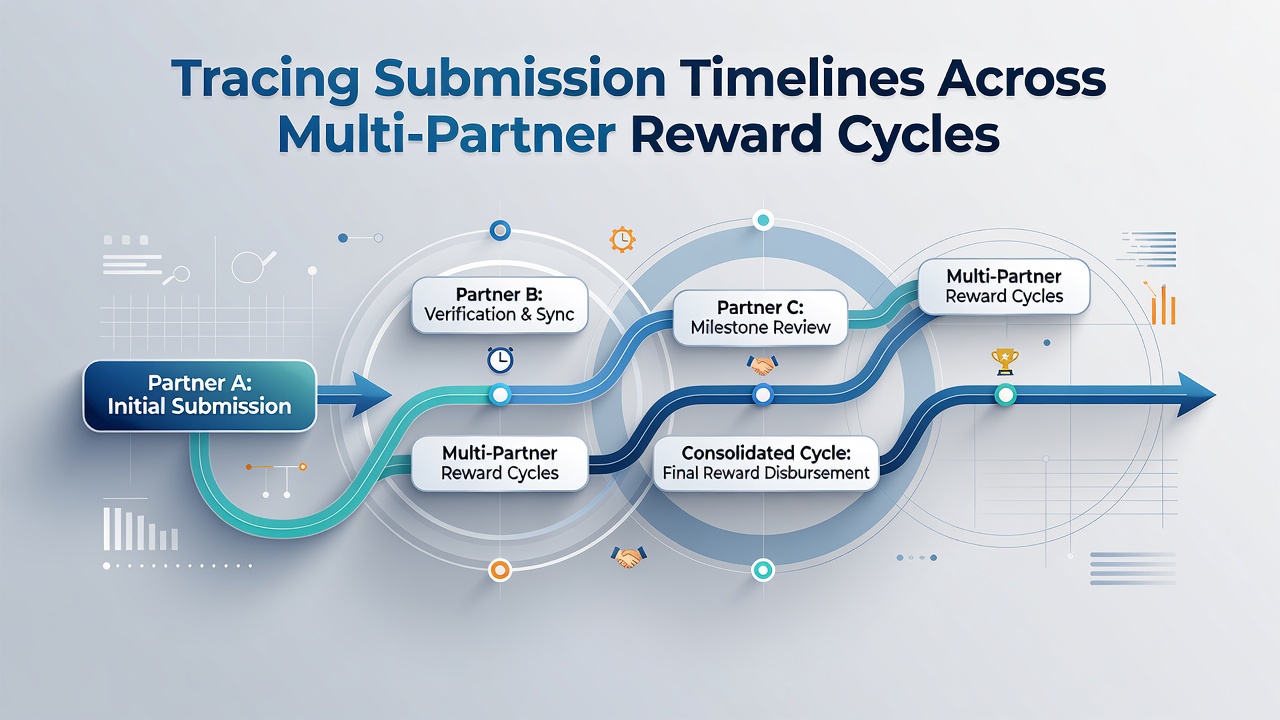
Tracing Submission Timelines Across Multi-Partner Reward Cycles
Submission timelines in multi-partner reward cycles follow structured logging systems that record each entry's date, time, and associated partner details through centralized databases. These systems capture data points at the moment of submission, creating sequences that organizers use to verify participation across different sponsors and recurring events. Researchers at academic institutions have documented how such records allow for cross-referencing between partners to maintain accurate participant histories over multiple cycles.
Core Mechanisms of Timeline Tracking
Entry platforms integrate timestamp protocols that log submissions in coordinated formats, often using synchronized clocks across partner networks to prevent discrepancies. Data from these logs shows patterns where entries cluster around specific promotional windows, and analysts note that verification occurs through sequential checks that compare partner-submitted records against a master timeline. Observers have seen how incomplete logs from one partner can shift the overall cycle validation, prompting automated alerts that flag delays before the next phase begins.
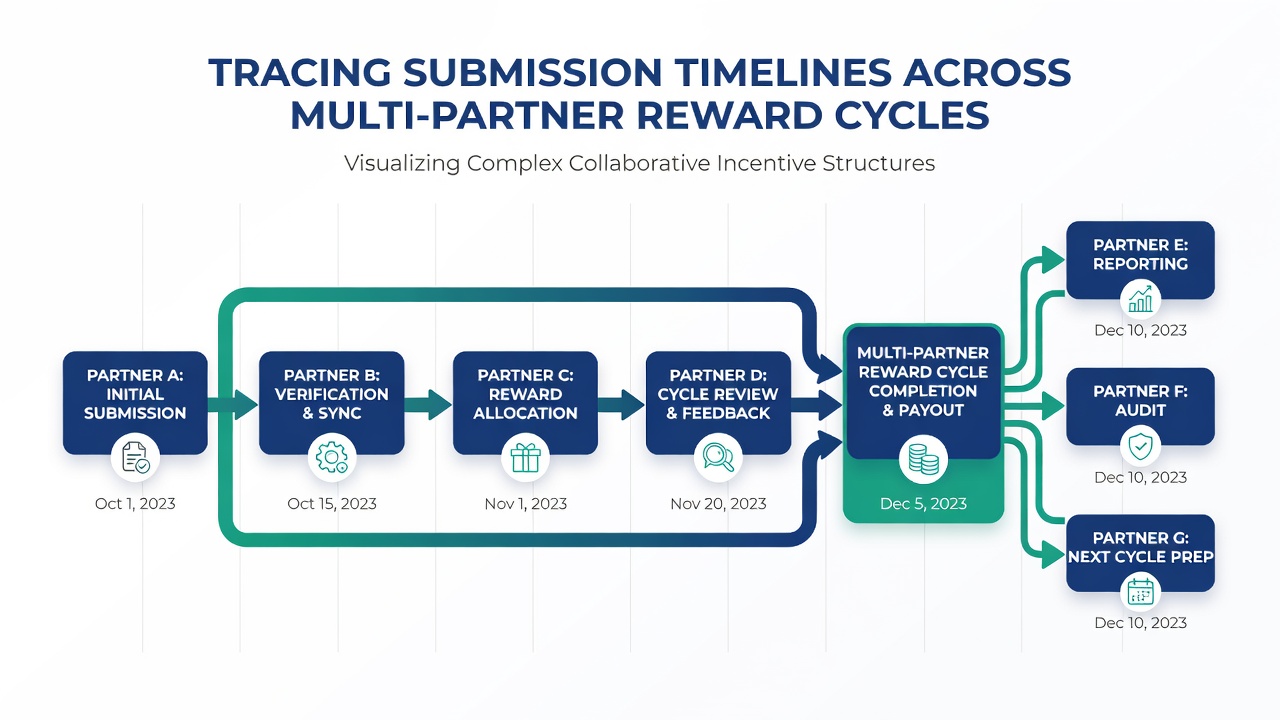
Software tools employed by promotion managers compile these timelines into visual flows that highlight overlaps or gaps between partner contributions. Studies from research institutions indicate that accurate tracing relies on standardized data fields including user identifiers, offer codes, and redemption confirmations, which together build a continuous chain across the cycle duration.
Regulatory Influences on Record Keeping
Government agencies enforce standards that require detailed timeline documentation in multi-partner promotions to support transparency and dispute resolution. According to reports from the Federal Trade Commission, compliance involves maintaining accessible logs for set periods, allowing authorities to audit sequences when questions arise about entry validity. In Canada the Competition Bureau applies similar requirements that emphasize verifiable timestamps to uphold fairness in collaborative reward programs.
European regulators through consumer protection directives have established guidelines that influence how partners share timeline data, ensuring entries from different regions align within unified cycles. Those who've examined audit outcomes note that discrepancies in partner reporting frequently trace back to variations in local time zone handling or delayed data uploads.
Patterns Observed in Recurring Cycles
Analysis of past cycles reveals that submission volumes often increase near partner-specific deadlines, creating dense clusters on the overall timeline that require careful segmentation during selection processes. Industry reports highlight cases where one partner's extended offer period extended the collective cycle, shifting subsequent verification stages by several days. Experts tracking these shifts point to integrated dashboards that adjust projected end dates automatically when any partner modifies its window.
By September 2026 current platform upgrades are expected to incorporate real-time synchronization features that further reduce timeline mismatches across international partners. Data collected from ongoing programs shows measurable improvements in log accuracy when partners adopt unified API connections for entry transmission.
Verification and Cross-Referencing Practices
Cross-referencing procedures compare submission timestamps from each partner against central records to confirm no duplicates or omissions exist within the cycle. Organizations conducting these checks employ algorithms that flag entries falling outside established windows, routing them for manual review. Those responsible for these reviews often discover that minor variances in partner clock settings account for the majority of flagged items.
Academic papers on promotional data management describe how cumulative timelines support trend identification, revealing engagement peaks tied to specific partner announcements. This information feeds back into cycle planning, allowing organizers to align future windows more precisely with participant behavior patterns documented in prior rounds.
Conclusion
Effective tracing of submission timelines across multi-partner reward cycles depends on coordinated logging, regulatory compliance, and ongoing refinement of data-sharing protocols. Records maintained through these processes provide the foundation for equitable selection and cycle continuity, with systems continuing to evolve in response to both technological capabilities and oversight requirements from diverse jurisdictions.